

A Quiet Morning Filled With Smart Support
Riya’s bus was late again—until her map app quietly drew a new blue route and whispered:
“Leave now and you’ll still reach on time.”On the bus, her music app switched to a “Focus” playlist. Later, a homework chatbot turned photosynthesis into a tiny story about a leaf making its own food.Riya wondered:“How does my phone know what I need?”
Like most of us, she was surrounded by invisible helpers—AI systems inside apps that fix grammar, suggest videos, guide traffic, and support learning.
AI wasn’t a robot. It was a quiet pattern-learner living inside her phone.
What AI Really Is
Aarav’s Simple Explanation
One evening, Riya asked her cousin Aarav, “What is AI really?”
Aarav smiled.
“Imagine a student who never sleeps and loves patterns,” he said.
You show this student thousands of examples—cats, birds, handwriting, words. When it guesses wrong, you correct it. Over time, it becomes very good at recognising and predicting.
That’s AI:
software that learns patterns from data and uses them to make predictions or create new content.
It doesn’t understand like humans.
But it is incredibly fast at noticing patterns.
Where Riya Meets AI in Everyday Life
Education: Her Calm, Patient Digital Tutor
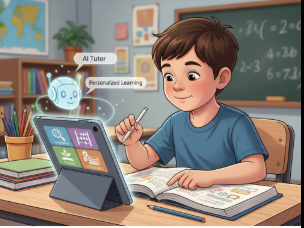
During exams, a chatbot helped Riya solve algebra step-by-step and generated practice questions.
Her teacher used AI to create worksheets faster—freeing more time to talk to students.
AI wasn’t replacing teachers.
It was enhancing learning.
Health: A Second Pair of Eyes for Doctors

At a clinic, AI highlighted tiny spots on X-rays so doctors wouldn’t miss anything during busy hours.
Not a robot doctor—
just a careful assistant.
Farming: Smarter Fields Near Her Village

A farmer showed drone images of his field.
Green meant healthy crops.
Red warned about possible disease or dryness.
AI wasn’t a giant farming machine—
it was a digital advisor.
Transport: Safer, Smarter Roads
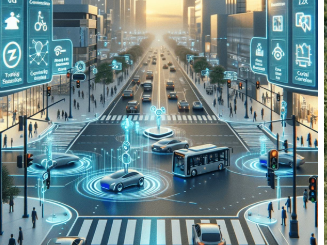
Riya’s map app predicted traffic using anonymous phone data.
Cars used AI to recognise lanes and stop automatically.
AI wasn’t the driver—
it was the co-pilot.
Creativity: A Smarter Brush for Her Ideas
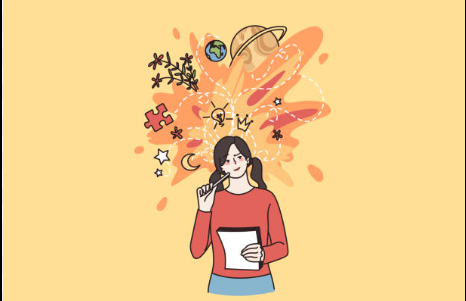
AI tools helped Riya create artwork and refine her essays.
But her cousin reminded her:
“Use AI as a helper, not a replacement for your voice.”
Everyday Life: Invisible Helpers All Around
Riya began noticing AI everywhere:
- Spam filters
- Video recommendations
- Voice assistants
- Translation apps
AI had become everyday infrastructure—quiet but powerful.
The Magic and the Limits of AI
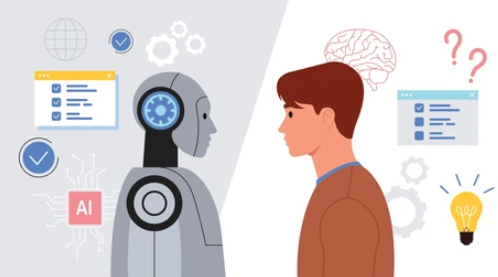
When AI Surprises—and When It Fails
A chatbot once gave Riya a wrong history date—but sounded confident.
It taught her an important lesson.
Her teacher listed AI’s Magic and Limits
Magic
- Multiple explanations
- Learns preferences
- Available anytime
- Handles big data quickly
Limits
- Can be confidently wrong
- Can carry biases
- May encourage laziness
- Needs privacy awareness
AI was powerful—but still needed supervision.
How AI Will Shape Riya’s Future Career
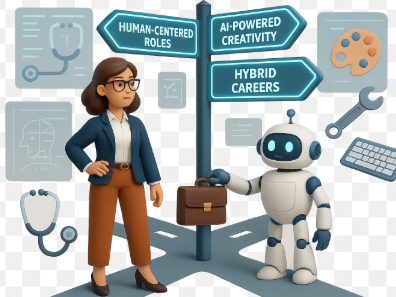
Thinking About Jobs in an AI-Powered World
Her class explored future careers:
- Teachers + AI: personalised learning
- Doctors/Nurses + AI: better diagnostics
- Farmers + AI: data-guided decisions
- Office workers + AI: faster analysis
- Artists/Writers + AI: new creative tools
The teacher summarised:
“The most valuable people are those who combine AI skills with human strengths—creativity, empathy, critical thinking, and ethics.”
How Riya Decides to Use AI Wisely
A Simple Checklist for Smart AI Use
Riya wrote strategies for herself:
✔ Use AI to learn, not copy
Ask for explanations, examples, and quizzes.
✔ Always double-check important facts
With textbooks, teachers, and trusted sites.
✔ Protect privacy
No full names, addresses, or sensitive details.
✔ Use AI to boost creativity
Turn notes into summaries, mind maps, or story ideas.
✔ Learn how AI works
So she could judge tools wisely.
✔ Use AI to help others
Explain concepts or translate messages.
AI felt less like a threat—and more like a skill.
Final Thought: AI Is the New Electricity—But It Needs Human Drivers
AI is spreading everywhere, just like electricity once did.
But it doesn’t replace people—it amplifies what people can do.
For students like Riya, three things matter:
- Know what AI can and cannot do.
- Use it to support your thinking—not replace it.
- Keep curiosity, ethics, and creativity in charge.
AI may be powerful,
but humans are still the drivers.